
How to Review AI Output in FP&A: If You Can't Teach It, You Don't Own It
By Charlie Liu ·
AI can build a financial model in minutes, and it can hard-code your drivers without telling you. Before you trust it, read the plan, check every formula and keep rule-based math mechanical. If no one on your team can explain the model, no one owns it.
Last week I asked AI to build me a financial model in Excel. It looked finished. Clean tabs, a sensible layout, numbers that tied.
Then I read the formulas one by one. Some of the drivers were typed in as fixed numbers. No flag, no note. I hadn't given it great documentation, and some of my own assumptions were off too. But if I hadn't checked every line, I would have handed over a model that didn't fully work.
That's the part of AI in FP&A nobody puts in the demo. AI can build the model, but finance still owns every number in it.
Why AI output in finance needs a human review
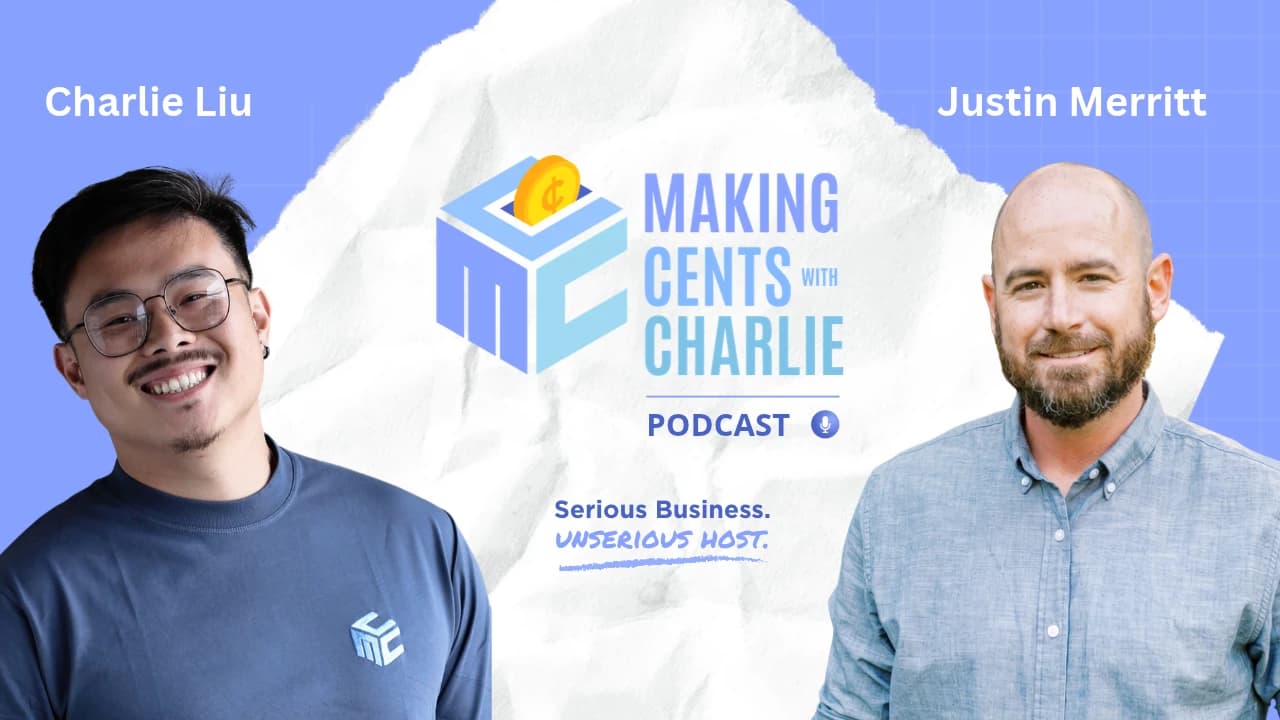
I talked about this with Justin Merritt, co-founder and CEO of TwinSix, on Making Cents with Charlie. Justin worked inside finance at IBM, Verizon and Oshkosh, then led teams at Vena and Planful. He has seen planning systems from every side of the table.
His description of AI is the most honest one I've heard. "It's the dumbest, smartest, hardest, best, fastest, sloppiest worker that you have," Justin said. "And you have to constantly be molding it like clay to get to what you actually need."
The problem is that finance runs on rules that don't bend. In Justin's words: "debits equal credits, assets equal liabilities plus equity." I need A plus B to equal C every day, and AI doesn't always know that.
Many leaders are trusting the output anyway. In Workiva's 2026 Midyear Executive Benchmark Survey, 84% of executives said they have at least some confidence in AI output without human review. And 26% said AI errors had reached external audiences or the board.
How to review AI output in FP&A: 3 checks
- Read the plan before it runs. "Even when it's writing the Python scripts and stuff, I read all of that as it's going," Justin said. "Maybe 60%, 70% of the time, I end up hitting the stop button, providing a correction before it's even gone to the output." I now print the plan and mark it up by hand before anything gets built.
- Check every formula for hard-coded numbers. Look for typed-in values where there should be drivers or lookup tables. Justin's example: the AI "hard-coded 60 and it didn't create a table with the asset types and the acceptable depreciation life." It works today. Add a new asset and the depreciation is wrong.
- Decide what stays mechanical. Anything rule-based, like depreciation, consolidation and the close, has to give the same answer every time. Use AI to prototype and speed up the build, not to decide the math.
If you can't teach it, you don't own it
"If you can't teach it, you don't own it," Justin said at the end of our conversation. "Because that means you truly don't actually understand it. And if you don't understand it, how can you own it?"
Here's a simple test for Monday. Pick the last model AI built for your team. Ask the person who built it to walk you through every driver. If they can't, you've found your first fix.
Reviewing AI output is dry work. It's also the work that makes the output yours.
Questions finance leaders ask
Can you trust AI to build financial models?
You can trust it to draft one. Read every step and every formula before the model is used for a decision, because AI can hard-code values without flagging them.
What should stay manual in FP&A when you use AI?
Anything rule-based should stay mechanical, so it gives the same answer every time. That includes depreciation, consolidation and the close.
How do you know if your team owns an AI-built model?
Ask the person who built it to explain every driver. If they can't teach it, they don't own it yet.
Listen to the full conversation with Justin on Making Cents with Charlie. I also covered AI in FP&A for CIMA Canada in a CPD webinar, AI in FP&A: What Works, What Breaks, and What You Still Have to Sign.
Not sure anyone on your team could walk you through your model? That's the first thing we look at.
Last updated