
What Building MCC Taught Me About Accountability
By Charlie Liu ·
There's a difference between being the one who's accountable and everyone else that you can't be told. You have to carry it once to understand it.
I've watched other people carry that weight before, thinking I understood it. I didn't. It's a different kind of hard, and no amount of watching from the side prepares you for actually holding it yourself.
Now I believe that sacrifice isn't something you apologize for. It's a trade you make on purpose. The only question worth asking is whether you're honest about what you're trading it for, and whether you'd make the same trade again.
I don't believe in leaders who sit on their throne. I believe we should be on the front lines with our team. If someone's working late consistently, the right move is to be there with them, not hand the discomfort downward and call it delegation.
But sacrifice only makes sense when it actually matches what the person wants. The best teams happen when someone's own goals run in the same direction as the team's. If someone is genuinely chasing growth and willing to sacrifice for it, my job is to support that choice and be present in it with them, not assume everyone should be grinding at my intensity. That distinction is on the leader to notice. It's not something you can expect someone to volunteer on their own.
The other thing that's made the hardest calls easier is having values written down before the moment arrives. The calls that matter most are usually the ones that are easiest to avoid, because avoiding them feels kinder in the moment. Having a clear set of values means you're not deciding from scratch every time one of them shows up, and it means the decision lands as softly as possible for the person on the other side of it.
None of this is a feeling though. A belief isn't proof. Here's the proof.
The execs we have now were individual contributors or middle management not long ago. Now they're making decisions, building their own systems. Leads who used to just execute projects are running teams of three to six people.
Honestly, the best part of any of this was never the company itself. It's watching someone become more than they thought they could be. Someone I coached a while back is now coaching someone else, doing it their own way. That never gets old, no matter how many times I get to watch it happen.
And it reaches further than that.
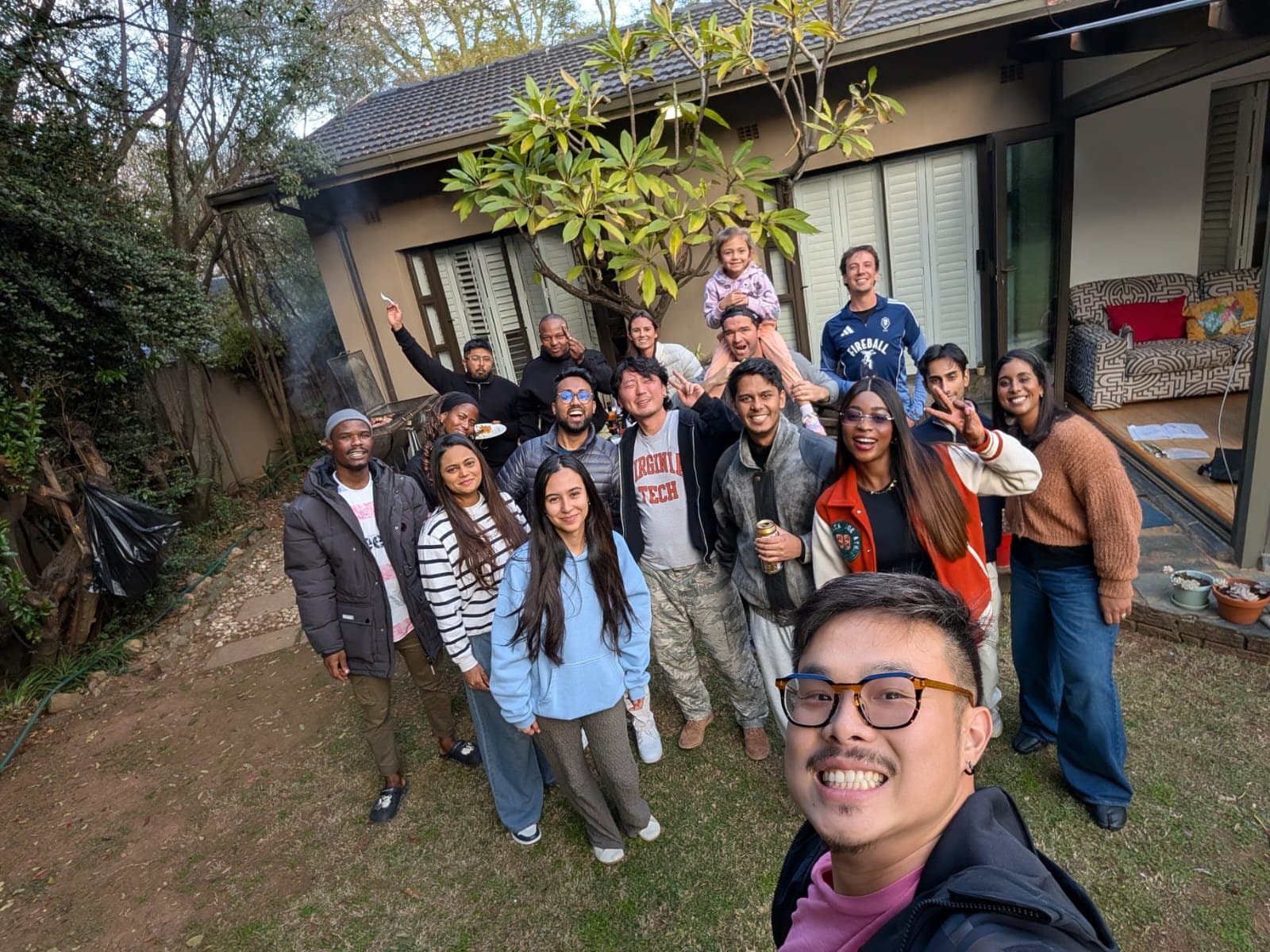
Building an office in South Africa meant learning a whole new culture from the ground up. New rhythms. New ways of working. I even had to learn how to design a physical office space, something I'd genuinely never had to think about before.
Mentoring the people we've hired there hasn't gone one direction. It's taught me as much as I hope it's taught them.
None of that happens without the sacrifices it took to build the company to where that opportunity could exist.
I have one responsibility above the rest: make sure as many of us as possible leave this ship much better than they came in.
Watching that happen, in the people, is what makes it feel like we're going the right way.
Charlie
Last updated